In the high-stakes world of oil and gas, project coordination is the invisible force that transforms engineering blueprints into operational reality. Whether it’s a multi-billion dollar refinery expansion or a cross-continental pipeline, success depends on a project coordinator’s ability to synchronize thousands of moving parts across vast distances and intricate technical landscapes.
While both fall under the “midstream” and “downstream” umbrellas, coordinating a refinery project is fundamentally different from a pipeline project. Understanding these nuances is key to delivering energy infrastructure safely, on time, and within budget.
1. Refinery Coordination: Managing Density and Complexity
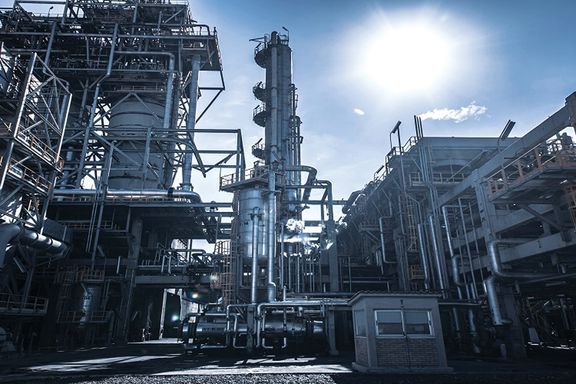
Refineries are often described as the “brains” of the operation. Here, the challenge isn’t distance, but density. Coordinating a refinery project—whether it’s a “Turnaround” (maintenance shutdown) or a new processing unit—requires managing a complex web of piping and process equipment within a confined boundary.
- Piping vs. Pipelines: In a refinery, the focus is on piping systems (governed by codes like ASME B31.3).[2][4][5][6] These are short, intricate networks connecting boilers, heat exchangers, and distillation columns.[4] Coordination involves managing “clashes” in 3D space where thousands of pipes must coexist in a tight layout.
- Turnaround Management: Refinery coordination often revolves around “shut-down” windows. Every hour a refinery is offline costs millions. Coordinators must orchestrate a “sprint” where hundreds of specialized contractors work simultaneously to inspect, repair, and restart the facility.
- Process Safety Management (PSM): Because refineries handle high-pressure, high-temperature chemicals in close proximity to personnel, coordination is centered on strict safety protocols and hazard operability (HAZOP) studies.
2. Pipeline Coordination: Managing Terrains and Logistics
If refineries are the brains, pipelines are the “arteries.” They span hundreds or thousands of kilometers, crossing borders, private lands, and varied ecosystems.
- Right-of-Way (ROW) and Stakeholders: Unlike the fixed perimeter of a refinery, pipelines require “Right-of-Way” coordination. This involves negotiating with thousands of individual landowners and navigating tribal, local, and national government regulations.
- Environmental and Regulatory Permitting: Pipeline coordinators spend a significant amount of time on environmental compliance. Crossing a single river or wetland can trigger oversight from agencies like the EPA or PHMSA. Coordination involves ensuring that construction crews adhere to strict environmental protection plans at every mile.
- Linear Logistics: Coordinating a pipeline project is a lesson in mobile logistics. Supply chains must move along with the construction “spread.” This means coordinating the delivery of thousands of pipe joints (API 5L standard), heavy machinery, and mobile camps to remote locations, often in harsh environments like deserts or sub-zero tundra.
3. The Common Thread: Modern Coordination Tools
Despite their differences, both refinery and pipeline projects are being revolutionized by the same digital tools. Modern project coordination is no longer just about Gantt charts; it’s about data integration.
- Digital Twins: Using 3D models to simulate construction before a single weld is made. In refineries, this prevents pipe clashes; in pipelines, it helps visualize terrain challenges.
- IoT and Real-Time Monitoring: Sensors on equipment allow coordinators to track progress and safety in real-time. Whether it’s monitoring the weld quality on a pipeline or the pressure in a refinery unit, data-driven coordination reduces the risk of rework.
- HSE (Health, Safety, and Environment): At the heart of every project is the goal of “Zero Harm.” Coordinators ensure that safety cultures are consistent, whether a technician is working in a confined refinery space or a remote pipeline ditch.